The best kids’ sports program is one your child wants to go back to, run by qualified coaches in a safe, age-appropriate setting where every child gets a turn. Everything else (the venue, the price, the uniform) matters less than those three things. Below is a seven-point checklist you can use to compare any program, including ours, before you commit.
The quick checklist
Short on time? Ask these seven questions of any program:
- Are the coaches qualified, and are they checked to work with children?
- Is the program designed for my child’s age and stage?
- Is it non-competitive and inclusive, or do only the strongest kids get a go?
- Will my child be active for most of the session?
- Does it build skills across lots of sports, not just one?
- Is it easy to fit into our week, and is there a trial?
- Would my child say it was fun on the way home?
The rest of this guide explains why each question matters and what a good answer looks like.
1. Qualified, checked coaches
A great coach does more than run drills. They notice the child hanging back, adjust the game on the spot, and keep everyone safe. Ask who runs the sessions, what training they have, and whether they hold a current Working With Children Check (or the equivalent in your state or territory). Any reputable provider should answer this without hesitation.

Green flag: coaches are trained in the program and can tell you how sessions are planned.
Red flag: vague answers, or sessions run by whoever is available on the day.
2. A program built for your child’s age
A four-year-old and a ten-year-old need very different things from sport. Little ones are learning to run, jump, throw and catch, and they need short, playful activities. Older kids can handle more structure, strategy and teamwork. A program that mixes everyone together, or expects preschoolers to follow adult rules, tends to end in tears.
GeckoSports programs are split by age for this reason: KUBS for ages 2 to 5, Youngsters for ages 5 to 8, and Midsters for ages 9 to 12. Whichever provider you choose, check that the activities match where your child is right now, not where you hope they will be next year.

3. Non-competitive and inclusive
Early on, the goal is confidence, not trophies. Australia’s physical literacy research and the Australian Sports Commission’s Physical Literacy Framework both emphasise building movement skills and enjoyment first, so children stay active for life. A program that sorts kids into winners and losers at age five can put the quieter or less coordinated child off sport for good.
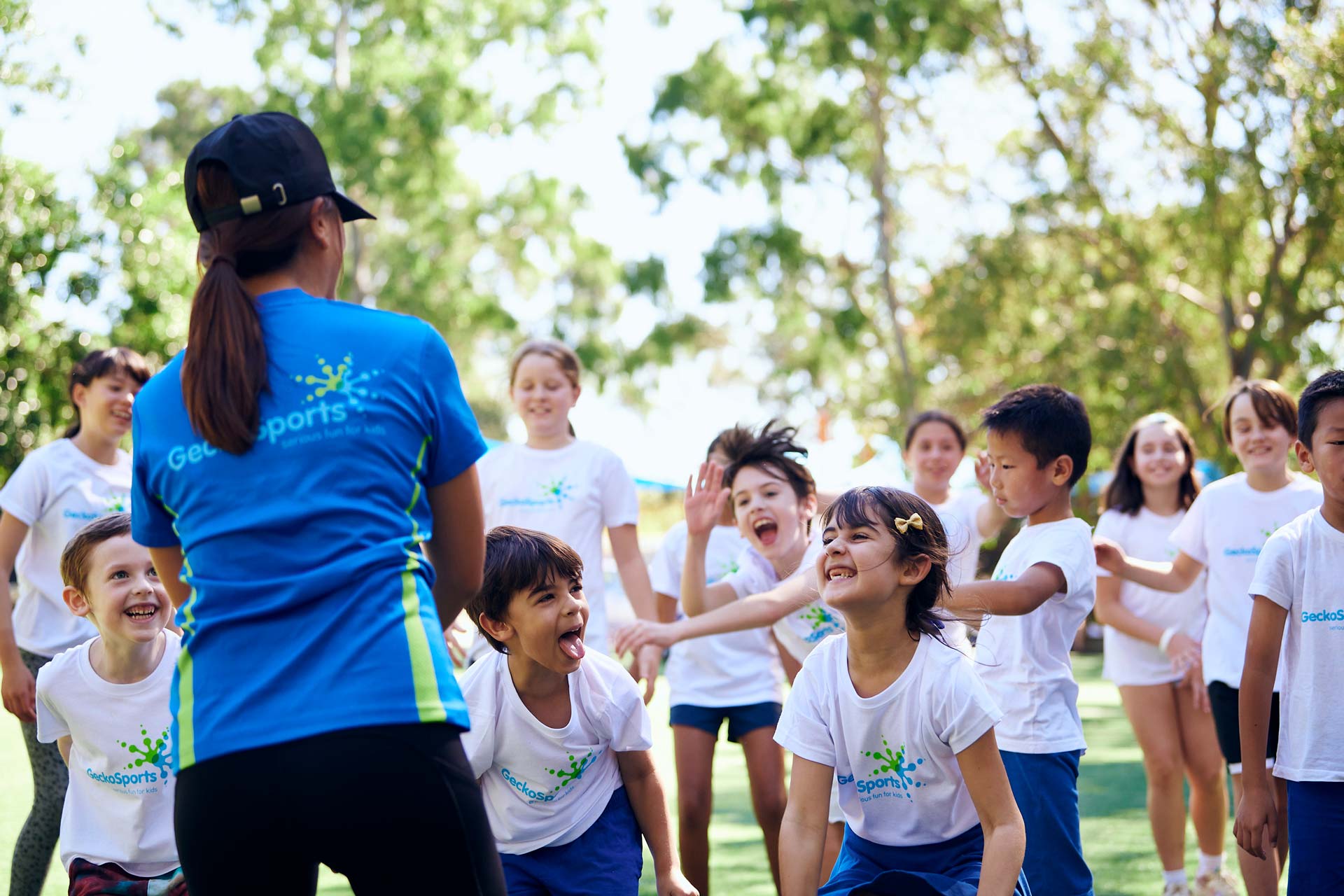
Look for programs where every child gets a turn, effort is celebrated, and nobody is left on the sideline waiting. Ask: “What happens if my child is shy, or finds it hard to keep up?” A good answer is warm and practical.
4. Plenty of moving, not much waiting
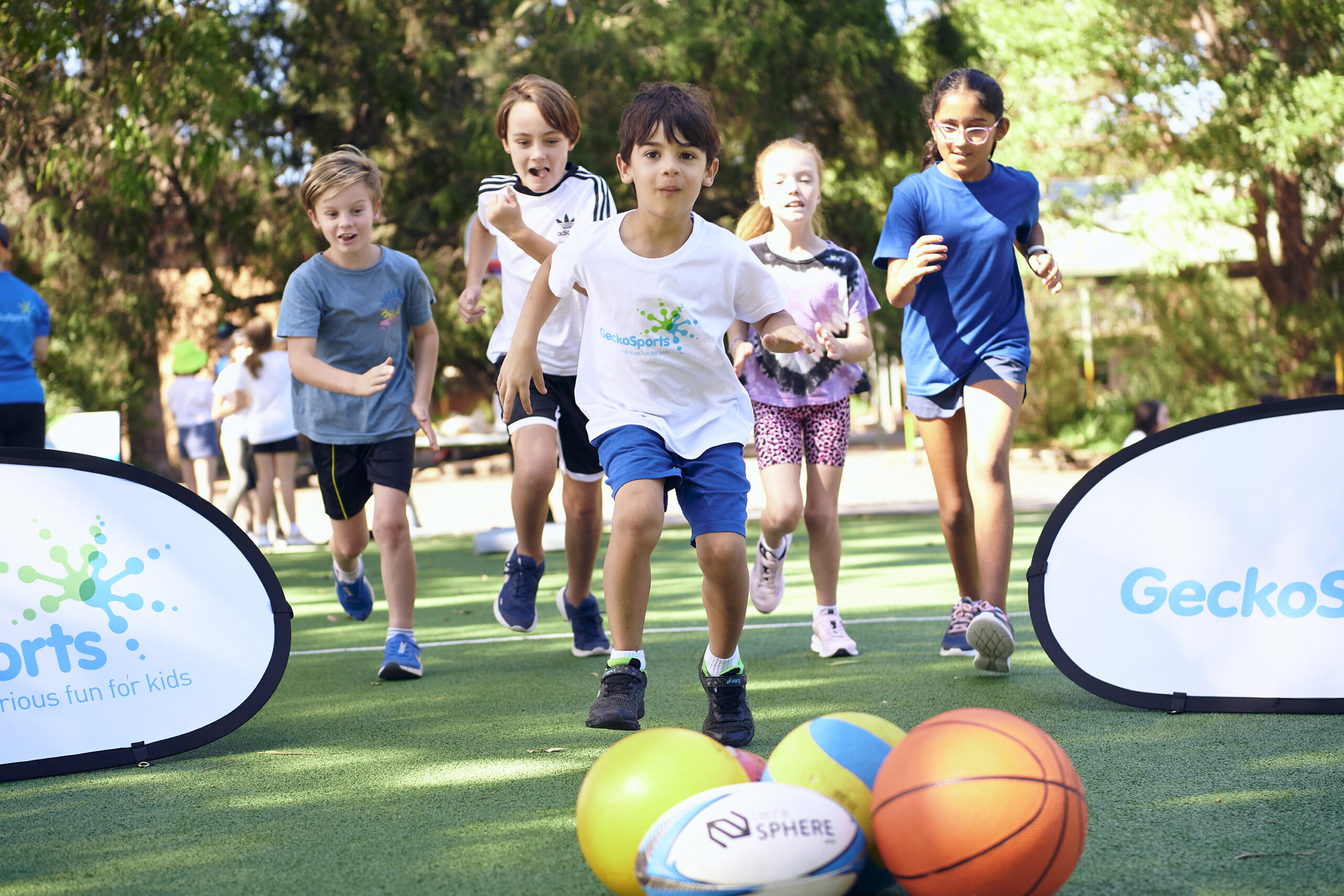
The Australian 24-Hour Movement Guidelines recommend that children aged 5 to 17 get at least 60 minutes of moderate to vigorous physical activity every day, and that younger children are active throughout the day. A weekly session will not cover all of that, but it should contribute. If kids spend half the lesson standing in a queue, it is not doing much for their bodies or their attention spans.

How to check: watch a session or ask for a trial. Count how many children are moving at any one moment.
5. Variety, not just one sport
Children who try a range of sports tend to build broader movement skills, and they get to discover what they actually enjoy. Multi-sport programs are a low-pressure way to find out whether your child loves ball games, running games, balance and coordination, or something else entirely. Specialising in a single sport can wait until they are older and know what they like.
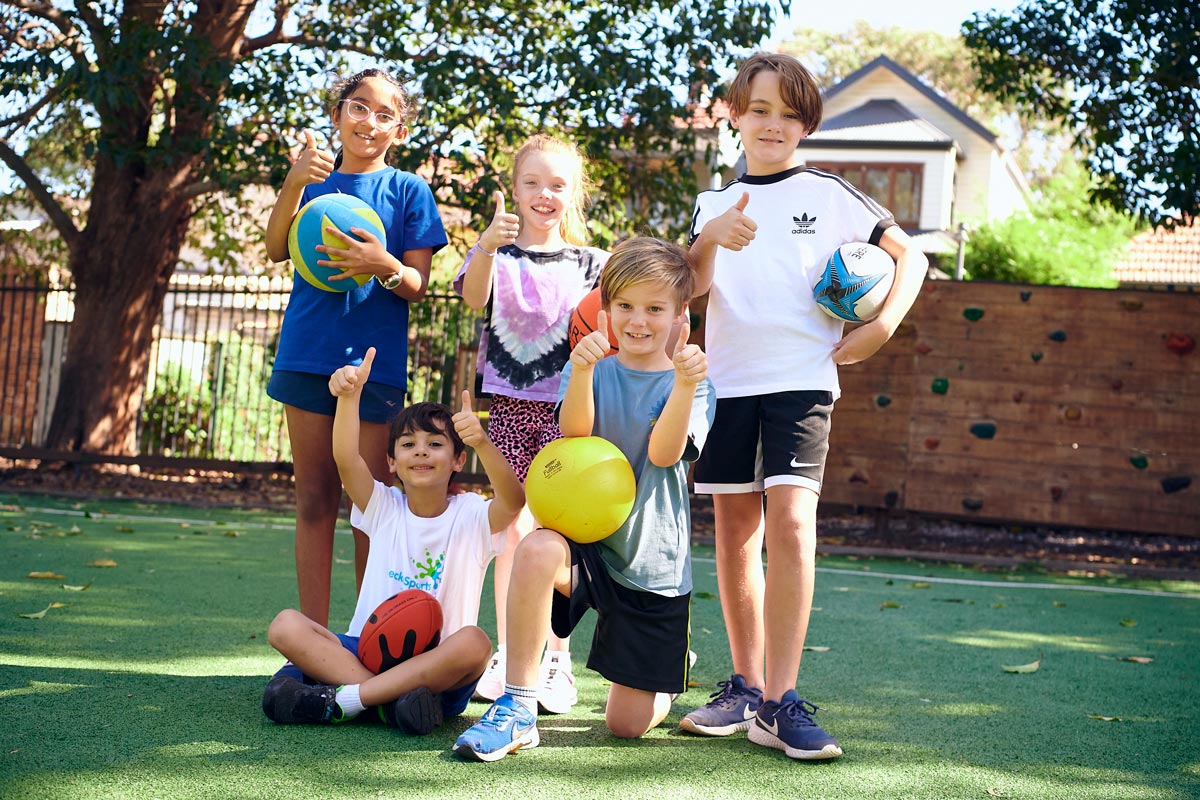
This is the idea behind GeckoSports: a mix of sports and games, so children build skills and confidence across the board while having a great time.
6. Easy for your family to say yes to
The best program in the world does not help if you cannot get there. Consider the practical side:
- Location and timing: is it close to home, school or childcare, and does it fit around naps and dinner?
- Trial or taster: can you try a session before committing?
- Cost: are fees clear upfront, with no surprise extras? Check whether any government or state sport vouchers can be used.
- Communication: will you know what your child did and how to support them at home?
7. The fun test
This one is simple, and it matters most. After the first session, ask your child how it went. If they are bouncing in the car seat and asking when they can go again, you have your answer. Children who enjoy sport are far more likely to keep playing, and that is where the long-term health, confidence and friendship benefits come from.

Common questions
What age should my child start a sports program?
Children can start from around age two in a play-based, parent-friendly format. At this stage the focus is on fun, basic movement and getting comfortable in a group, not on learning rules or competing.
How do I know if my child is ready?
If they enjoy running, climbing, kicking or throwing and can cope with short group activities, they are probably ready. A trial session is the easiest way to find out. Keep it relaxed, and let them watch for a few minutes first if they need to.
Is a multi-sport program better than a single sport?
For most younger children, yes. A mix of activities builds a wider base of movement skills and keeps things fresh, while giving your child room to find their favourites.
What if my child is shy or not sporty?
That is exactly who a good, non-competitive program is for. Look for coaches who welcome every child, make activities easy to join, and celebrate effort rather than ability.
Find a GeckoSports club near you
GeckoSports runs fun, non-competitive, expert-designed multi-sport programs for children aged 2 to 12, delivered by trained coaches at clubs across Australia. If you would like to see how a session feels for yourself, find your local GeckoSports club and ask about a trial.
Find your local GeckoSports club
Sources: Australian Government Department of Health, Australian 24-Hour Movement Guidelines; Australian Sports Commission, Physical Literacy Framework.

Australia’s leader in after-school multi-sports and fitness classes, parties, holiday programs, events and specialised school clinics for primary school aged kids. We are experts in kids sports, fitness and wellbeing!